

Hypalon CSM

Chlorosulfonated polyethylene
An elastomeric material with aging resistance
Chlorosulfonated polyethylene (CSM) was first industrialized by Dupont in the United States in 1952. Chlorosulfonated polyethylene is made from low-density polyethylene or high-density polyethylene through chlorination and chlorosulfonation reactions. It is a white or yellow elastomer that can dissolve in aromatic hydrocarbons and chlorinated hydrocarbons but not in fats and alcohols. It can only swell but not dissolve in ketones and ethers. It has excellent ozone resistance, atmospheric aging resistance, chemical corrosion resistance, etc., good physical and mechanical properties, aging resistance, heat resistance and low temperature resistance, oil resistance, flame resistance, wear resistance, and electrical insulation resistance. It has a wide range of uses. Only a few countries in the world, such as the United States, Japan, Russia and China, have built equipment. The global total annual production capacity is about 75,000 tons, and the output is close to the production capacity.
Physical and chemical properties
It is a saturated elastomer with polyethylene as the main chain, with an average molecular weight of 30,000 to 120,000. Among them, CSM2910 is 30000, CSM4010 is 40000, CSM3304 is 120000, and CSM2305 is 100000. Chlorosulfonated polyethylene is a white or milky white flake or granular solid with a relative density of 1.07~1.28. Mooney viscosity is 30~90. Brittle temperature is -56~-40℃. The chemical structure of CSM is completely saturated, with excellent ozone resistance, weather resistance, heat resistance, flame resistance, water resistance, chemical resistance, oil resistance, wear resistance, etc. The solubility parameter of CSM is δ=8.9, which dissolves aromatic hydrocarbons and halogenated hydrocarbons, only swells but does not dissolve in ketones, esters, and ethers; it is insoluble in aliphatic hydrocarbons and alcohols.
It has the common properties of raw rubber and its own unique properties, such as excellent ozone resistance, atmospheric aging resistance, chemical corrosion resistance, etc., good physical and mechanical properties, aging resistance, heat resistance and low temperature resistance, oil resistance, flame resistance, wear resistance, and electrical insulation resistance.
Performance
Alias: Hypalon Hypalon hypalon
Chlorosulfonated polyethylene is a special chlorine-containing elastomer material with a highly saturated chemical structure made from polyethylene as the main raw material through chlorination and chlorosulfonation reactions. It is a high-performance special rubber variety. It is a white or milky elastic material with thermoplastic properties. Because the molecular structure contains chlorosulfonyl active groups, it shows high activity, and is particularly resistant to chemical corrosion, ozone oxidation, oil erosion, flame retardancy, etc. It also has weather resistance, heat resistance, ion radiation resistance, low temperature resistance, abrasion resistance, electrical insulation and excellent mechanical properties. CSM was developed for military engineering purposes in the early days. However, due to its large permanent deformation, its scope of use is also limited.
Production method
There are two methods for producing chlorosulfonated polyethylene, namely the solvent method and the gas-solid method.
The traditional solvent method: It is a liquid phase manufacturing process that uses chlorine, sulfur dioxide, etc. as chlorosulfonylating agents. Its main disadvantage is the low utilization rate of sulfur dioxide (20-30%), and the product chlorine content is only 25-45%. The sulfur content is 0.8-1.7%, and the fatal disadvantage is that carbon tetrachloride is required as a solvent. In addition, the post-processing process of this liquid phase process is relatively cumbersome (removal of acidic gases, CSM condensation and separation operations, etc.).
Gas phase method: The synthesis process was reported as early as the 1980s, but the earliest industrial device was not put into use until 2009. This process was independently developed by a domestic company, and the product was successfully trial-produced in the same year. In May 2010, the gas-solid method of chlorosulfonated polyethylene production process passed the scientific and technological achievement appraisal organized by the China Petroleum and Chemical Industry Federation. The biggest breakthrough of the gas-solid production process is that it does not use organic solvents at all, and the materials are directly contacted by the reaction gas, which shortens the process flow and makes the process green and environmentally friendly.
Product Uses
CSM has been widely used in the fields of wires and cables, waterproofing coils, and the automotive industry, and has become a commonly used special rubber. Anti-corrosion coatings made from CSM as the basic material have a wide range of uses.
CSM is widely used in the automotive industry abroad, but its application in this area is almost blank in my country. With the acceleration of the localization process of spare parts in my country's automotive industry, the potential consumption of CSM in the automotive industry is huge. It is estimated that the potential demand for CSM in the automotive industry in 2005 should be at least 3,000 tons.
CSM is used in industry to manufacture products such as pipes, conveyor belts, and seals with special properties. For example, laminated tubes made with CSM as the inner layer have low permeability to fluorocarbon refrigerants and are suitable for refrigerant delivery pipes. When manufacturing CSM-fluororubber laminated tubes, if peroxide is added, the peel strength of the laminated product can be greatly improved. The laminated product is suitable for manufacturing pipes and containers for transporting and storing fuel oil.
CSM can be blended and modified with other rubbers. CSM blended with fluororubber can improve the processing performance of the blended rubber. CSM can be blended with EPDM to improve the physical and mechanical properties and thermophysical characteristics of the vulcanized rubber. Adding CSM and isoprene rubber to EVA polymer can produce slip resistance, wear resistance, and oil resistance. CSM can be mixed with PVC and PU in an extruder and then vulcanized to produce vulcanized rubber with improved oil resistance and ozone resistance.
Application technology
Vulcanization system
Some people think that the statement that "MgO, ZnO is the CSM vulcanization system" is unreasonable. Most of the information on the combination and vulcanization of CSM and chlorinated polymers comes from Japan, such as the chlorinated polyethylene and chlorosulfonated polyethylene in the first volume of the Rubber Industry Handbook. Some academic literature contains some information about this type, but it is still plagiarized (it cannot be said to be a reference, because I have not given myself experiments and thinking).
In CR and CIIR, because they contain highly active allyl chloride, they can be cross-linked with metal oxides. However, in chlorinated polymers such as CSM and CM, there is no such active chlorine as a vulcanization active point, and it cannot be vulcanized so easily. Fortunately, in CSM, sulfonation was carried out, and a highly active "sulfonyl chloride" group appeared, which can be vulcanized much more easily than CM. The commonly used TRA in the CSM formula is the most effective vulcanizer for CSM (not a vulcanization accelerator). When there is no oxide such as magnesium oxide, CSM can also be vulcanized. After adding magnesium oxide, it only plays the role of an acid absorber and can improve the performance.
But there is one strange thing. After adding zinc oxide (ZnO), the vulcanization efficiency is affected. This shows that zinc oxide can not only accelerate the dehydrochlorination (HCl), but also cause the instability of the rubber. In polymers without highly active chlorine, ZnO can only accelerate the dehydrochlorination rate when heated. (Introduction to the information: It is not ZnO itself that causes the dehydrochlorination, but ZnCl2 generated by the reaction of Zn and Cl. The mechanism of this place can be found in the organic chemistry <Halogenated hydrocarbons> chapter, Lewis acid to halogenated hydrocarbons part). Pentaerythritol alone cannot crosslink CSM. Only when there is a vulcanizing agent such as TRA, can the vulcanization speed be greatly increased, which greatly promotes the vulcanization speed, but the scorch performance is somewhat
Reinforcement filling system
The difference between CSM rubber and other rubbers is that even without adding reinforcing fillers, its vulcanized rubber has a high static vulcanization strength. This is because the vulcanization structure of CSM has unique characteristics. The side groups generated during the vulcanization process associate with the polarity of the cross-linking bond to form microparticles. Such microparticles function as both a vulcanization network and a physical crosslinking point.
However, fillers can still improve the process performance of the rubber, improve the heat resistance and wear resistance of the vulcanized rubber, and reduce costs. Commonly used reinforcing fillers include carbon black, calcium carbonate, kaolin, diatomaceous earth, white carbon black, talcum powder, etc. The extent of the role of fillers depends on their particle size. The finer the particles, the better the performance of the resulting vulcanized rubber. Among inorganic fillers, white carbon black can guarantee the highest heat resistance. Diatomaceous earth can improve the tear strength of vulcanized rubber and increase its rigidity and hardness.
To improve the weather resistance of vulcanized rubber, kaolin should be used, and it has the following characteristics: good dielectric properties, and it does not decrease after moisture absorption, and has excellent dynamic properties. In light-colored products, barium sulfate and zinc barium white can be effectively filled, and titanium dioxide can improve the color brightness and weather resistance of vulcanized rubber.
|
formula
|
-
|
1
|
2
|
3
|
4
|
|
CSM
|
-
|
100
|
100
|
100
|
100
|
|
Magnesium Oxide Activity 150
|
-
|
20
|
-
|
4
|
-
|
|
Magnesium Oxide Activity 40
|
-
|
-
|
20
|
-
|
4
|
|
Titanium dioxide
|
-
|
25
|
25
|
35
|
35
|
|
TOTM
|
-
|
5
|
5
|
5
|
5
|
|
calcium carbonate
|
-
|
50
|
50
|
50
|
50
|
|
Pentaerythritol
|
-
|
3
|
3
|
3
|
3
|
|
accelerator DPTT
|
-
|
2
|
2
|
2
|
2
|
|
scorch time
|
MS(121℃)T10(min)
|
18.45
|
47.3
|
21.1
|
23.3
|
|
raw performance
|
200% elongation MPa
|
16.3
|
9.5
|
10.5
|
8.8
|
|
153℃*15min
|
Tensile strengthMpa
|
18.2
|
12,3
|
16.6
|
14.4
|
|
-
|
Elongation at break %
|
350
|
400
|
430
|
450
|
|
-
|
Hardness (Shore A)
|
86
|
81
|
78
|
75
|
|
compression set
|
70℃*22h
|
39.3
|
48.6
|
48.2
|
56.0
|
CSM vulcanized rubber containing fillers has high chemical stability. Thermal cracking carbon black, barite, etc. can make the vulcanized rubber obtain the best hydrochloric acid resistance. For sulfuric acid resistance, the fillers that can achieve the best effect are thermal cracking carbon black, kaolin, barite, diatomaceous earth, etc. For nitric acid resistance, it is thermal cracking carbon black.
Plasticizing system
Plasticizers are used in chlorosulfonated polyethylene rubber to improve the process properties of the rubber, the low-temperature properties of the vulcanized rubber, and to improve its elasticity and reduce hardness. The most commonly used petroleum oils, ointments and ester plasticizers in CSM rubber. The dosage can be slightly more than that in other rubbers. In vulcanized rubber that is in contact with chemicals, the amount of plasticizer should be reduced to a minimum.
For rubber to be used at low temperatures, it is best to use ester plasticizers. Such as DOP, DOA, DOS, etc. Chlorinated paraffin is used as a flame retardant in other rubbers. In CSM, in addition to flame retardancy, it can also improve tensile strength and the retention rate of elongation after heat aging, and the low-temperature performance is also good. Chlorination of about 40% is good, and more than 50% chloride has improved flame retardancy but poor low-temperature performance.
Stable protection system
The role of the stabilizer is to prevent chlorosulfonated polyethylene rubber from degrading during production, storage and use. Commonly used are stearates, organotin, magnesium oxide, etc. Magnesium oxide is a good and common stabilizer that can effectively absorb by-products such as hydrogen chloride. For the relationship between magnesium oxide activity and vulcanized rubber performance, see Table 2-1
Table 2-1 Effect of magnesium oxide activity on CSM physical properties
CSM rubber vulcanizates usually do not need to add antioxidants except for high-temperature exposure. When the temperature exceeds 120 degrees, the antioxidant NBC is the most effective stabilizer and also acts as an activation accelerator, but it also damages the processing safety performance.
Processing aids
In order to improve the sticking of CSM rubber on the open training mill and calender and improve the extrusion performance, waxes with good compatibility with CSM, such as microcrystalline wax, can be used. In addition, petroleum and paraffin waxes can also be used, but their sprayability limits their use. It is effective to use polyethylene glycol below 77 degrees and polyethylene wax above 77 degrees as processing aids. When used in combination with nitrile rubber, styrene-butadiene rubber, and butadiene rubber, in addition to reducing costs and achieving the purpose of improving adhesion, it can also improve processing performance, especially butadiene rubber. Adding 3-5 parts by mass will improve processing performance.
In order to improve the self-adhesiveness of the rubber, low-molecular coumarone-in resin is generally used. Adding about 10 parts by mass of petroleum resin can also effectively improve the self-adhesiveness of the rubber.
Due to the good color stability of chlorosulfonated polyethylene, products of various colors with good performance can be produced. Because many organic colorants will react with polymers during the CSM vulcanization process, the colorants suitable for CSM are mostly inorganic compounds. The colorant not only has a coloring effect on the vulcanized rubber, but also protects the CSM from the effects of ultraviolet light.
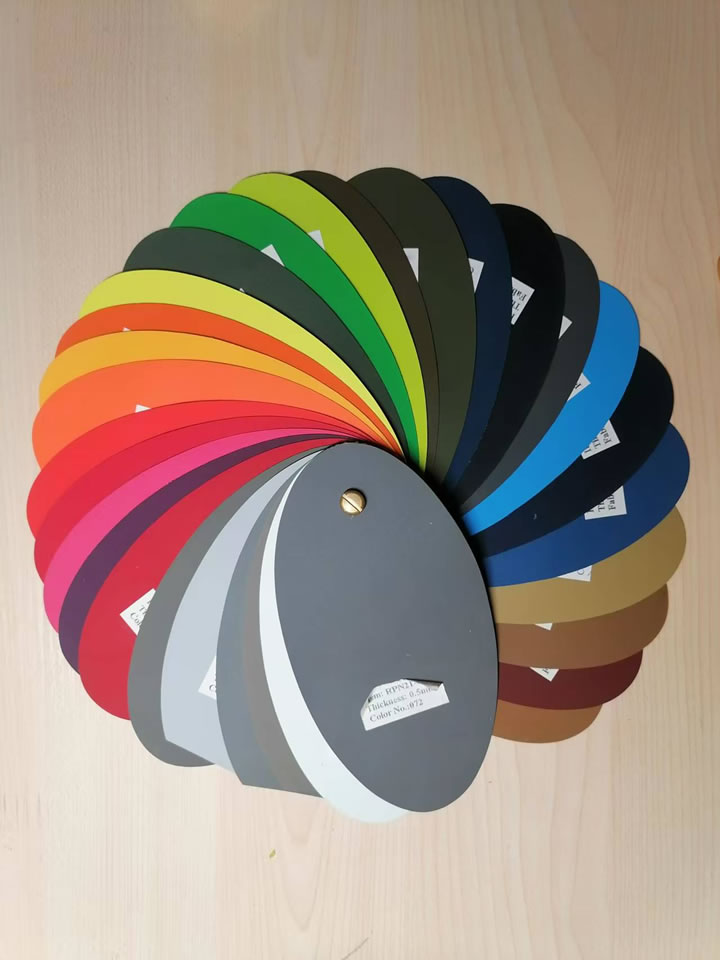
What is Hypalon rubber cloth made of? Chlorinated elastomer Hypalon (chlorosulfonated polyethylene)
Hypalon shows its true strength when exposed to high temperature oxidative chemicals. It is resistant to flex cracking, wear, weather, UV/ozone, heat and chemicals. It is easy to dye and has stable color, low water absorption, making it widely used as sheath and insulation layer of wires and cables, roof waterproofing layer, automotive and industrial hoses and synchronous generation. Equally important, Hypalon shows a long life in harsh environments, as can be seen from the life of linings and movable covers of drinking water, sewage pools and other containers.
Chlorosulfonated polyethylene is a saturated elastomer with polyethylene as the main chain, with an average molecular weight of 30,000 to 120,000. Among them, CSM2910 is 30,000, CSM4010 is 40,000, CSM3304 is 120,000, and CSM2305 is 100,000. Chlorosulfonated polyethylene is a white or milky white flake or granular solid with a relative density of 1.07~1.28. Mooney viscosity is 30~90. Brittle temperature is -56~-40℃. The chemical structure of CSM is completely saturated, and it has excellent ozone resistance, weather resistance, heat resistance, flame resistance, water resistance, chemical resistance, oil resistance, wear resistance, etc. The solubility parameter of CSM is δ=8.9, which dissolves aromatic hydrocarbons and halogenated hydrocarbons, only swells but does not dissolve in ketones, esters, and ethers; it is insoluble in aliphatic hydrocarbons and alcohols.